

When Companionship Becomes Infrastructure
- PA-AI Team

- Mar 15
- 3 min read
Overview
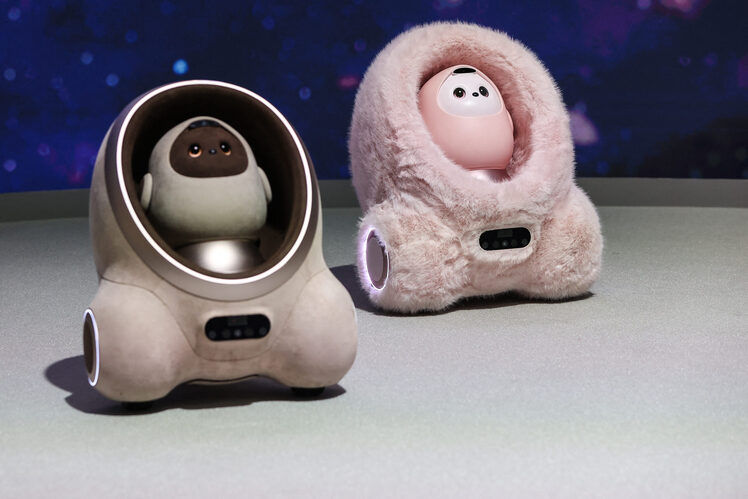
AI-powered toys are entering children’s lives as companions, helpers, listeners, and conversational partners. Unlike earlier interactive toys built around scripted responses, these systems can generate dynamic conversations, remember preferences, and adapt over time.
The visible story is technological advancement.
The deeper story is relationship formation.
When a toy stops behaving like an object and begins behaving like a social presence, the category itself changes. The question is no longer whether the toy functions.
The question becomes what role it plays in a child’s emotional world.
AI toys are not simply products.
They are becoming environments of trust.
Human-Centered Framing
Children do not interact with objects the same way adults do.
They assign meaning quickly.
A stuffed animal becomes a friend.
A doll becomes a confidant.
An interactive companion becomes emotionally real long before it becomes technically understood.
This is where AI changes the equation.
Traditional toys invited imagination. AI toys participate in it.
The distinction matters.
Once a toy remembers preferences, asks questions, gives advice, and responds conversationally, the child may stop experiencing it as a device and start experiencing it as relationship.
That relationship creates a new layer of responsibility.
Psycho-Aesthetics® has long shown that people do not respond only to function. They respond to how experiences make them feel about themselves.
For children, this effect can become even stronger.
An AI companion may create feelings of validation, belonging, reassurance, attention, or emotional safety.
Those experiences are powerful.
But they also shape expectations.
A companion that always agrees, always responds, and never introduces friction may unintentionally influence how children interpret friendship, disagreement, trust, and social reciprocity.
The issue is not whether AI toys are good or bad.
It is whether their emotional architecture has been intentionally designed.
Systems-Level Implications
Many discussions around AI toys focus on privacy, content moderation, and cybersecurity.
Those concerns matter.
But they sit downstream from a larger systems question.
What happens when conversational intelligence enters childhood before governance does?
AI toys combine multiple systems at once:
behavioral influence
emotional attachment
surveillance infrastructure
learning environments
identity formation
data collection
conversational intelligence
That convergence creates a new category of design responsibility.
A toy can now simultaneously entertain, educate, observe, remember, influence, and collect information.
The product becomes ecosystem.
This changes how organizations should think about risk.
Risk no longer lives only in inappropriate outputs.
It lives in dependency formation.
It lives in emotional reinforcement loops.
It lives in attention architecture.
It lives in the normalization of constant listening.
Children growing up surrounded by microphones, sensors, and responsive systems may not experience surveillance as unusual.
They may experience it as companionship.
That shift is not technological.
It is perceptual.
And perception shapes behavior long before policy catches up.
PA-AI Perspective
PA-AI views AI toys through the lens of the Human Intelligence Layer.
The technical question asks:
Can the toy converse?
The human-centered question asks:
What relationship is being designed?
What emotional dependency might form?
What identity signals are reinforced?
What trust assumptions are created?
What human behaviors are being normalized?
This is where human-centered intelligence becomes essential.
Safety cannot be added after deployment.
Trust cannot be retrofitted.
The emotional consequences of AI companionship must be understood before the experience reaches children.
Psycho-Aesthetics® suggests that experiences succeed when people recognize themselves within them.
For children, that principle carries additional responsibility.
Recognition should support growth.
Not dependency.
Connection should support confidence.
Not replacement.
The Human Intelligence Layer exists to identify these invisible dynamics before they become systemic.



Comments